"The IT Service Desk"
6/9/20262 min read
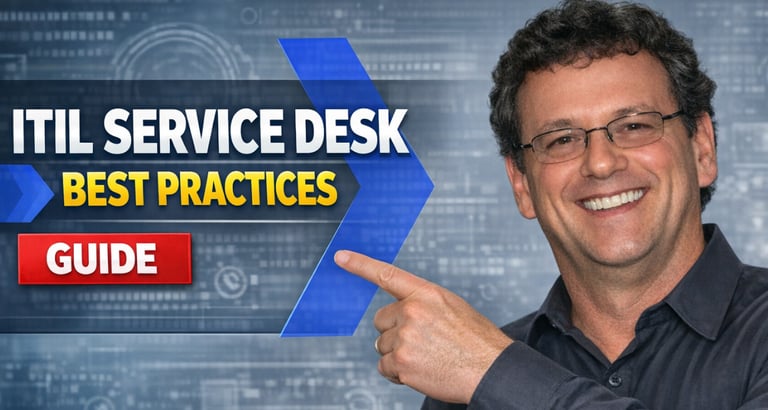
A Proper IT Service Desk is the Front Door into IT
Author: Bob Colson, ServiceNow CSA & ITIL Certified
Focus: IT Service Desk Implementation and Best Practice
YouTube: https://youtu.be/-VAm6mMFBRs
Building a Modern IT Service Desk with ITIL: A Practical Guide for High‑Performing ITSM Teams
A well‑designed IT Service Desk is more than a support function – it is the operational heartbeat of IT. Using the ITIL framework, organizations can transform their Service Desk into a disciplined, user‑focused practice that restores productivity quickly, strengthens communication and drives continual improvement across all IT services.
Why the Service Desk Matters
The Service Desk exists to keep the business running. It restores service productivity, protects critical operations and shapes the user experience during every interaction. Using ITIL as the foundation ensures the Service Desk is not just reactive support as it becomes a structured, measurable and business‑aligned practice.
“If the Service Desk fails, the business feels it immediately.”
Service Desk vs. Help Desk: A Modern Distinction
There is a difference between the two and you should know it:
A Help Desk focuses on break/fix technical issues.
A Service Desk manages the entire user experience across Incidents, Requests, Access, communication, and integration with other ITIL practices.
The Service Desk is a formal ITIL function with Governance, metrics and cross‑practice alignment which is far more strategic than legacy Help Desk models.
Core Responsibilities of an ITIL‑Aligned Service Desk
Essential responsibilities that define a mature Service Desk:
Logging every interaction with accuracy
Performing triage and priority classification
Attempting first‑contact resolution
Escalating intelligently using the Critical Services List (CSL)
Communicating clearly and proactively
Documenting troubleshooting steps
Identifying trends for Problem Management
“The Service Desk assists in service restoration or Service Request fulfillment… and provides key communication, escalations and status updates.”
Roles That Make the Service Desk Work
A high‑functioning Service Desk includes:
L1 Analysts for intake, triage and communication
Sr. Analysts / SMEs for complex issues and coaching
Leads / Supervisors for queue health and SLA adherence
Service Desk Managers for strategy, staffing and performance
Incident Managers & Major Incident Managers for high‑impact events
These roles ensure both day‑to‑day operations and major incidents are handled with discipline and speed.
The Critical Services List (CSL): The Service Desk’s Fast‑Decision Engine
One of the strongest elements of the Service Desk is usage of the Critical Services List (“CSL”).
The CSL helps the Service Desk:
Identify critical impacts instantly
Assign the correct priority
Trigger escalation paths
Notify the right resolver groups
Initiate communication requirements
Metrics That Matter
The KPIs that define Service Desk maturity:
First Response Time (<15 min for P1s)
Resolution Rate (>90%)
Service Availability (>99.9%)
CSAT (>4.2/5)
First Call Resolution (>70%)
MTTR by priority
The Bottom Line
The IT Service Desk is the operational heartbeat of IT Service Management - it connects users to IT through structured communication, rapid incident resolution and consistent service delivery. Built on the ITIL framework, it transforms support into a strategic capability that strengthens Governance, improves efficiency and drives continual improvement across the organization.
Watch the YouTube video for more in-depth understanding - https://youtu.be/-VAm6mMFBRs
Contact
Questions? Reach out anytime.
Phone
+1-503-564-8858
© 2026. All rights reserved.
Address
Onboarding ITSM LLC
5441 S. Macadam Ave. Suite N
Portland, OR 97239